Power electronics · Engineered in India

Power.
Opened up.

Your engineering partner for power backup, renewable energy and energy storage. We develop the electronics, firmware and connected interfaces behind your product.

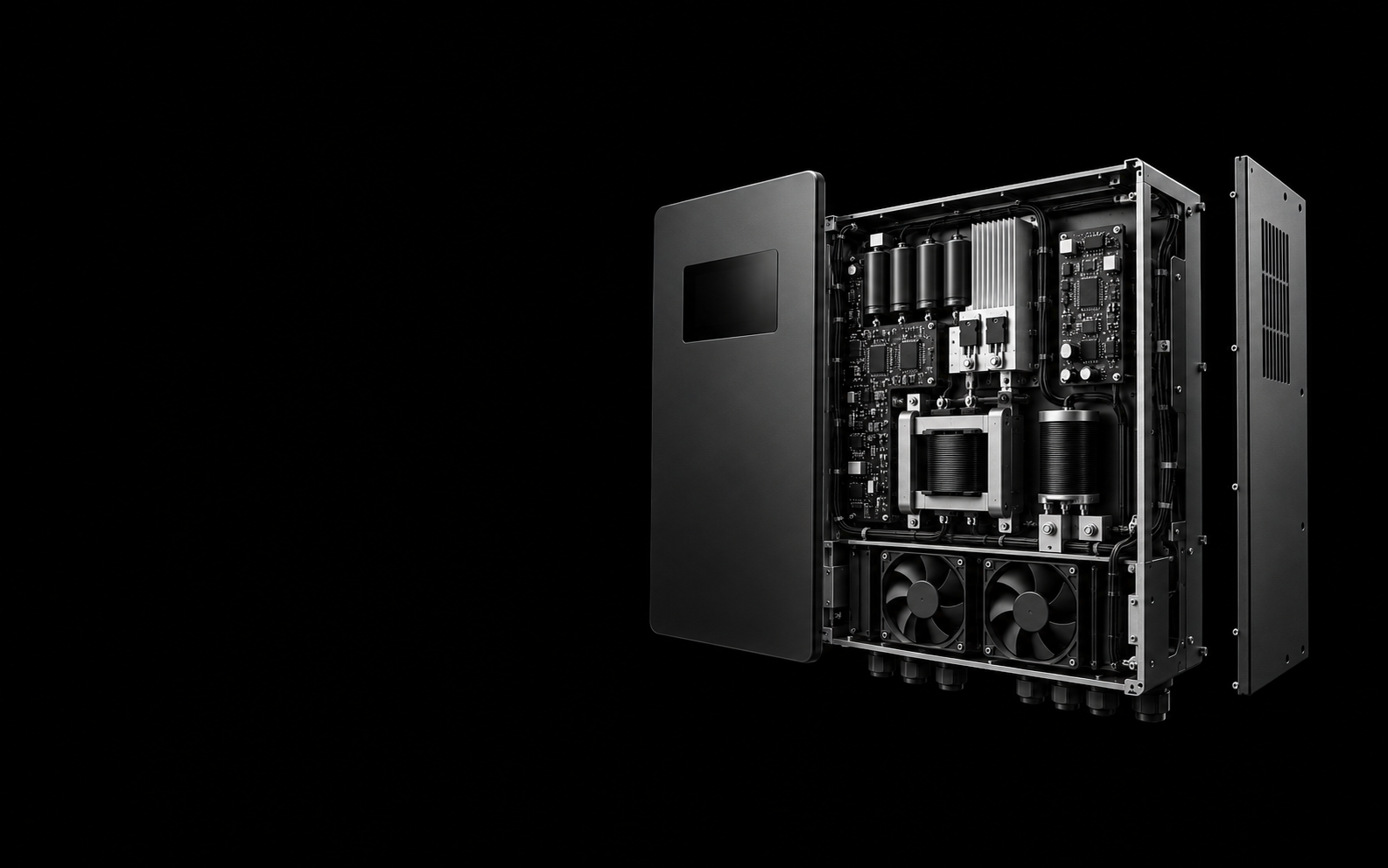
Exploded-open power inverter showing its enclosure panels, power electronics, control circuitry, magnetics and dual cooling fans
DC LINK POWER STAGE MAGNETICS HARDWARE / FIRMWARE / CONTROL
01 / Capabilities

No in-house R&D?
We become your R&D team.

Complete product development under one roof, from power electronics and embedded firmware to monitoring devices and apps.

B

Embedded Firmware

Real-time control firmware that turns a power stage into a dependable product.

  • Digital power control
  • BMS & energy management
  • STM32 and NXP platforms
  • Diagnostics, CAN & OTA
C

Monitoring Devices

Monitoring hardware that tracks system status and performance, helping users and service teams understand their products.

  • System status and performance
  • Connected monitoring hardware
  • Bluetooth & Wi-Fi integration
  • Cloud telemetry
D

Apps & Interfaces

Interfaces that connect users to their products, with clear information and controls designed around the way the system works.

  • Product dashboards
  • Connected user interfaces
  • System status displays
  • Hardware and app integration
Working with Wyre

Your flexibility.
Your freedom.

Every engagement is built around your product and your business. That is our core philosophy.

01 / TECHNOLOGY

Technology that adapts

We tailor the solution to your product, its operating requirements and the features your customers need.

02 / ENGAGEMENT

Commercial models that fit

We structure the engagement around the way you want to work, with flexibility in scope and commercial terms.

03 / SUPPORT

Dedicated engineering.
Dedicated client support.

Separate teams focus on product development and client support, keeping engineering progress and your day-to-day needs in view.

02 / Selected work

Built—not merely integrated.

Selected platforms developed by the Wyre team.

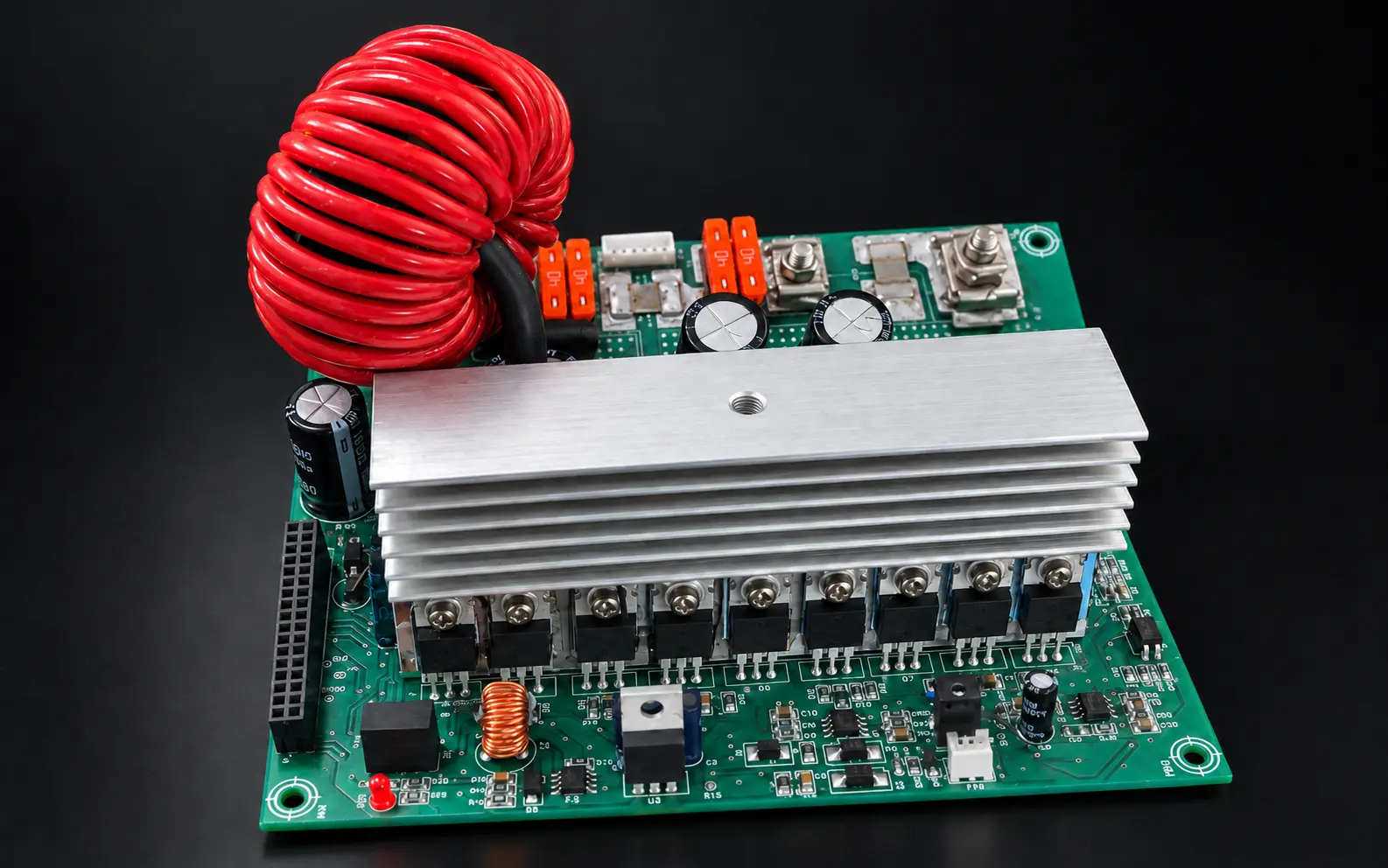
Fully assembled Wyre MPPT solar charge controller showing the power board, heatsink and high-current inductor
01 / MPPT POWER PLATFORM

Solar power conversion

MPPT Solar Charge Controllers

A high-current synchronous-buck platform engineered for efficient solar charging, controlled thermal performance and dependable operation across 12 V and 24 V battery systems.

Efficiency
Up to 96%
Battery
12 V / 24 V
Current
Up to 110 A
Control
Digital MPPT
Topology
Synchronous buck
Charging
CC / CV regulation
Tracking
P&O algorithm
Protection
Voltage / current / thermal
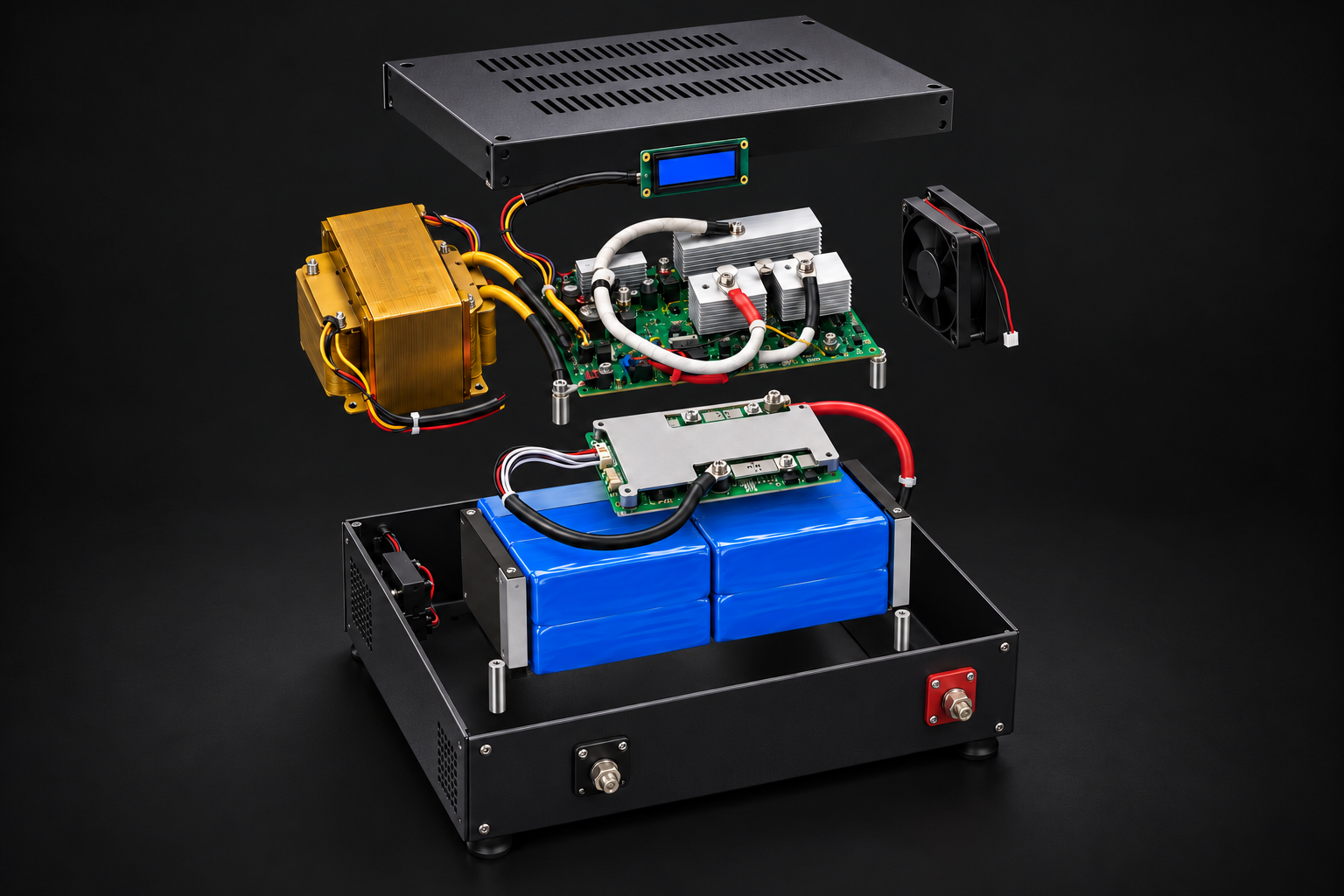
Exploded view of the Wyre pure sine wave ESS showing its battery pack, BMS, inverter power board, transformer, cooling fan and enclosure
02 / SINE WAVE ESS

Integrated backup power

Pure Sine Wave ESS

A compact energy-storage platform integrating the inverter power stage, low-frequency transformer, battery pack, BMS, thermal management and embedded protection inside one serviceable system.

Power
850–2500 VA
Architecture
Low-frequency
Output
Pure sine wave
Integration
Inverter + battery + BMS
Battery bus
12 V / 24 V
Control
Closed-loop SPWM
Changeover
Automatic mains transfer
Protection
Overload / short / thermal
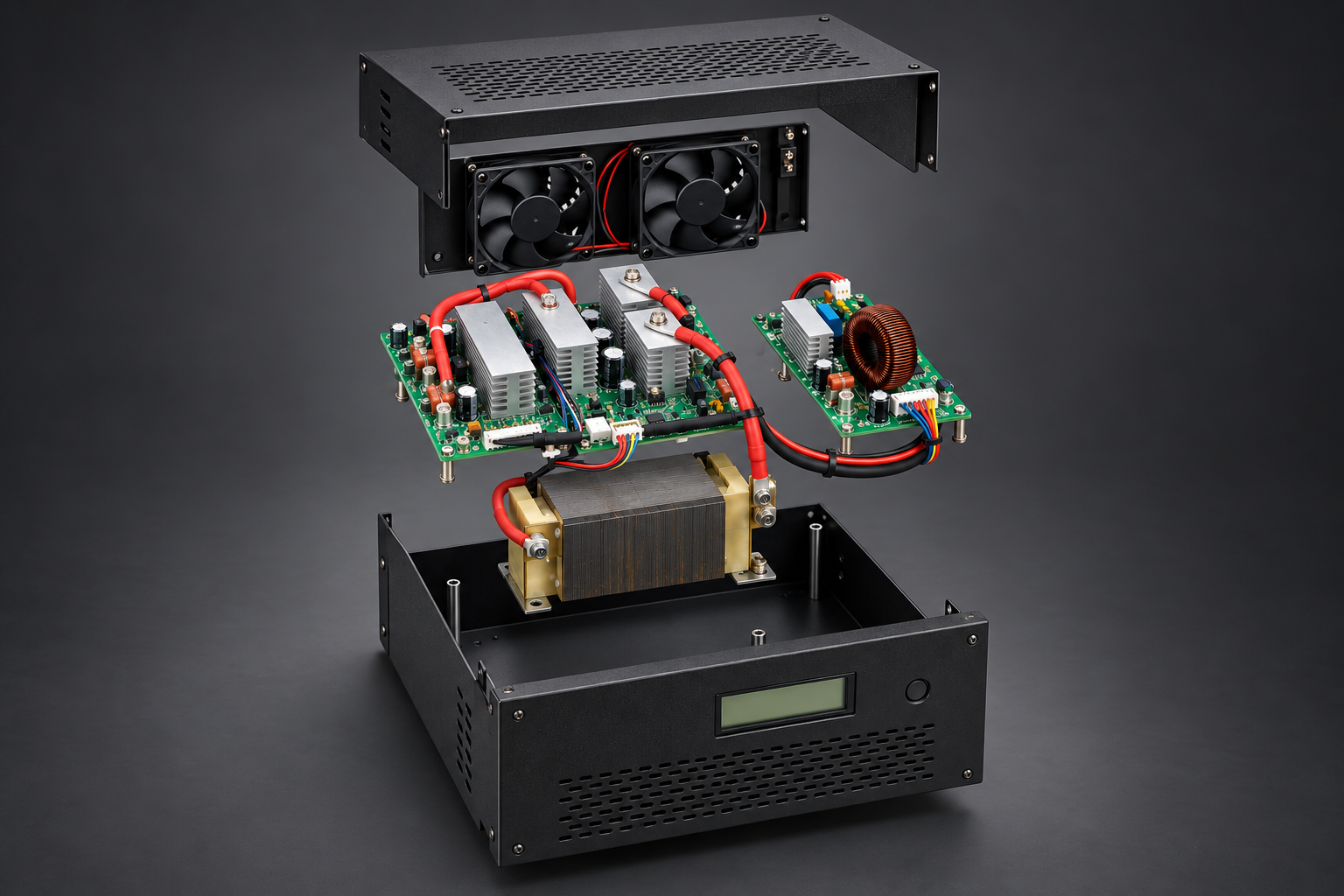
Exploded view of the Wyre Off-Grid Solar PCU showing dual cooling fans, inverter and MPPT PCBs, transformer, inductor and enclosure
03 / OFF-GRID SOLAR PCU

Solar generation to clean AC

Off-Grid Solar PCU

A coordinated off-grid platform combining the pure sine wave inverter, MPPT solar charger, low-frequency transformer, embedded protection and thermal management in one production-ready system.

System
Up to 4 kW
Solar
Integrated MPPT
Output
Pure sine wave
Scope
Hardware + firmware
Battery bus
12 V / 24 V
Charging
Solar + mains
Magnetics
Low-frequency transformer
Protection
PV / battery / AC faults
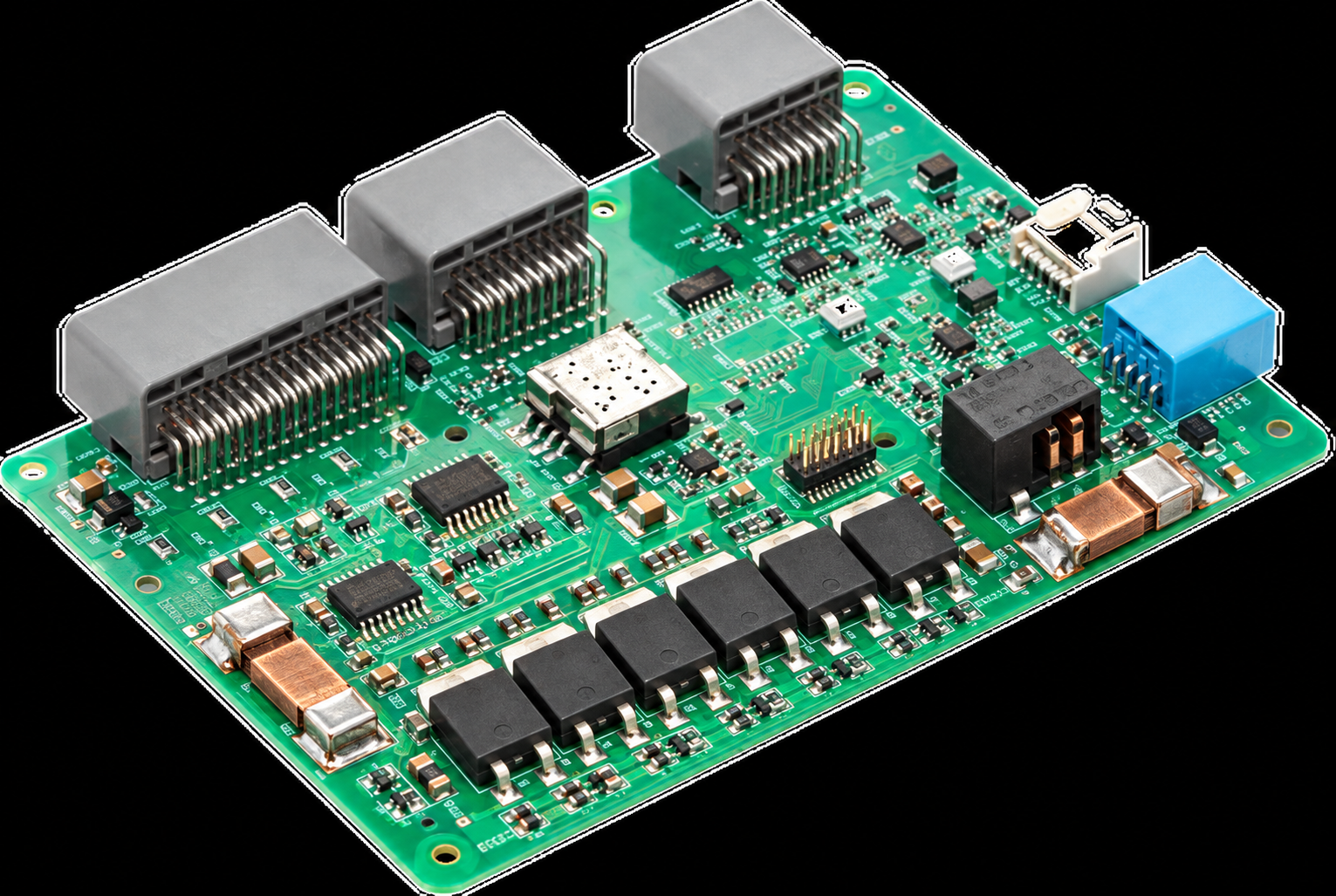
Battery management system circuit board with cell-monitoring electronics, high-current MOSFETs, copper shunts and pack connectors
04 / BATTERY MANAGEMENT
Reference image / DC Components

Battery intelligence and protection

Battery Management Systems

Configurable BMS hardware and embedded firmware for cell monitoring, passive balancing, pack protection and system-level communication—developed around the chemistry, current path and recovery behaviour of the final product.

Chemistry
LFP / Li-ion
Monitoring
Voltage + temperature
Protection
Charge / discharge control
Connectivity
CAN / UART / Bluetooth
Balancing
Passive cell balancing
Current path
High-current MOSFET stage
Sensing
Bidirectional pack current
Diagnostics
Fault status + event data
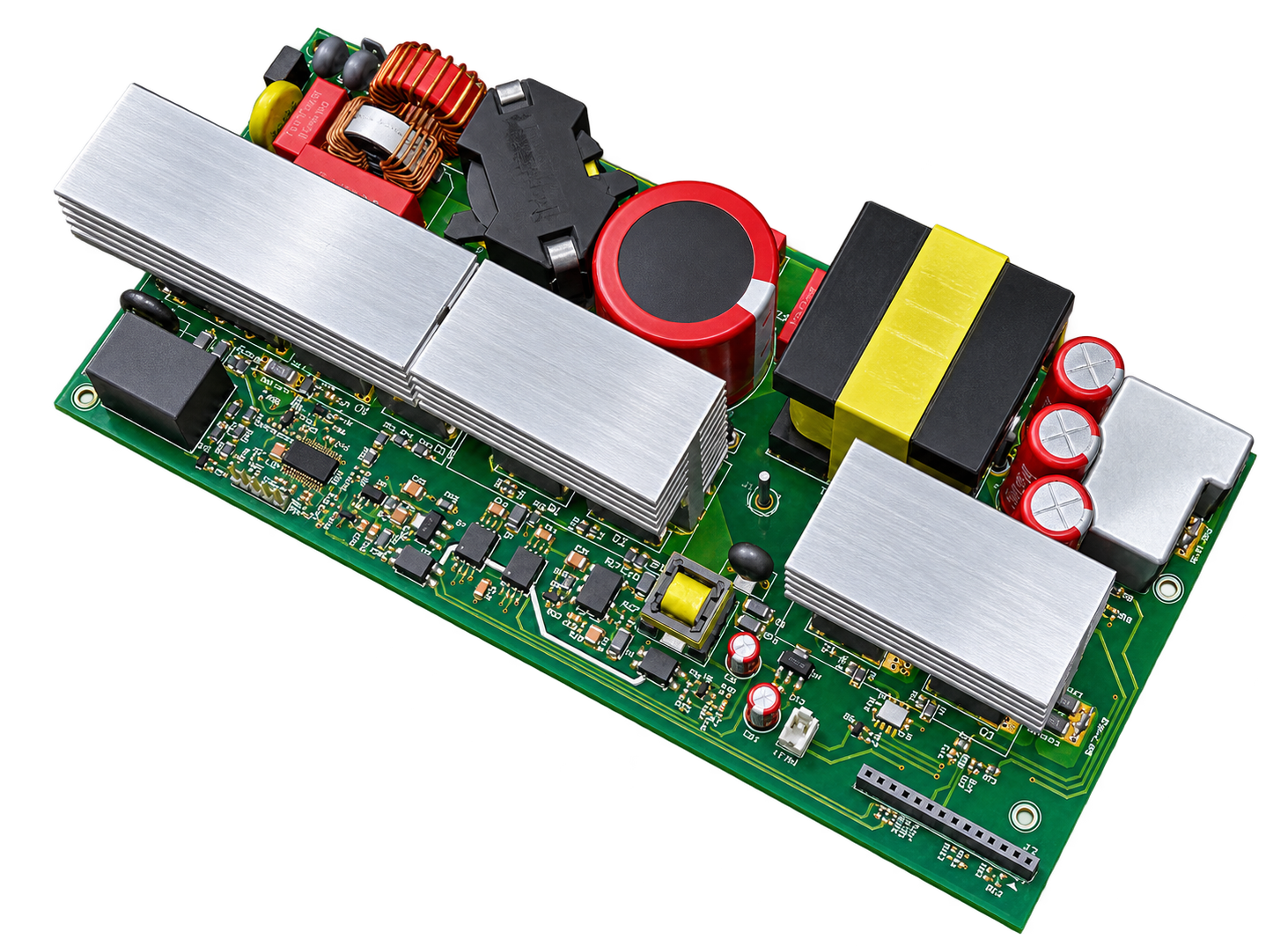
Photorealistic visualization of an EV charger power PCB with aluminum heatsinks, copper magnetics and control electronics, based on the Microchip reference design
05 / EV CHARGING

Power conversion for electric mobility

EV Charger Platforms

Isolated AC–DC charger platforms with power-factor correction, regulated CC/CV charging, BMS communication and protection designed together for two- and three-wheeler battery systems.

Power
Up to 3.3 kW
Charging
CC / CV
Control
Digital power
Interface
CAN / UART
Architecture
Isolated AC–DC
Input stage
Power-factor correction
Application
2W / 3W battery systems
Protection
OV / OC / short / thermal
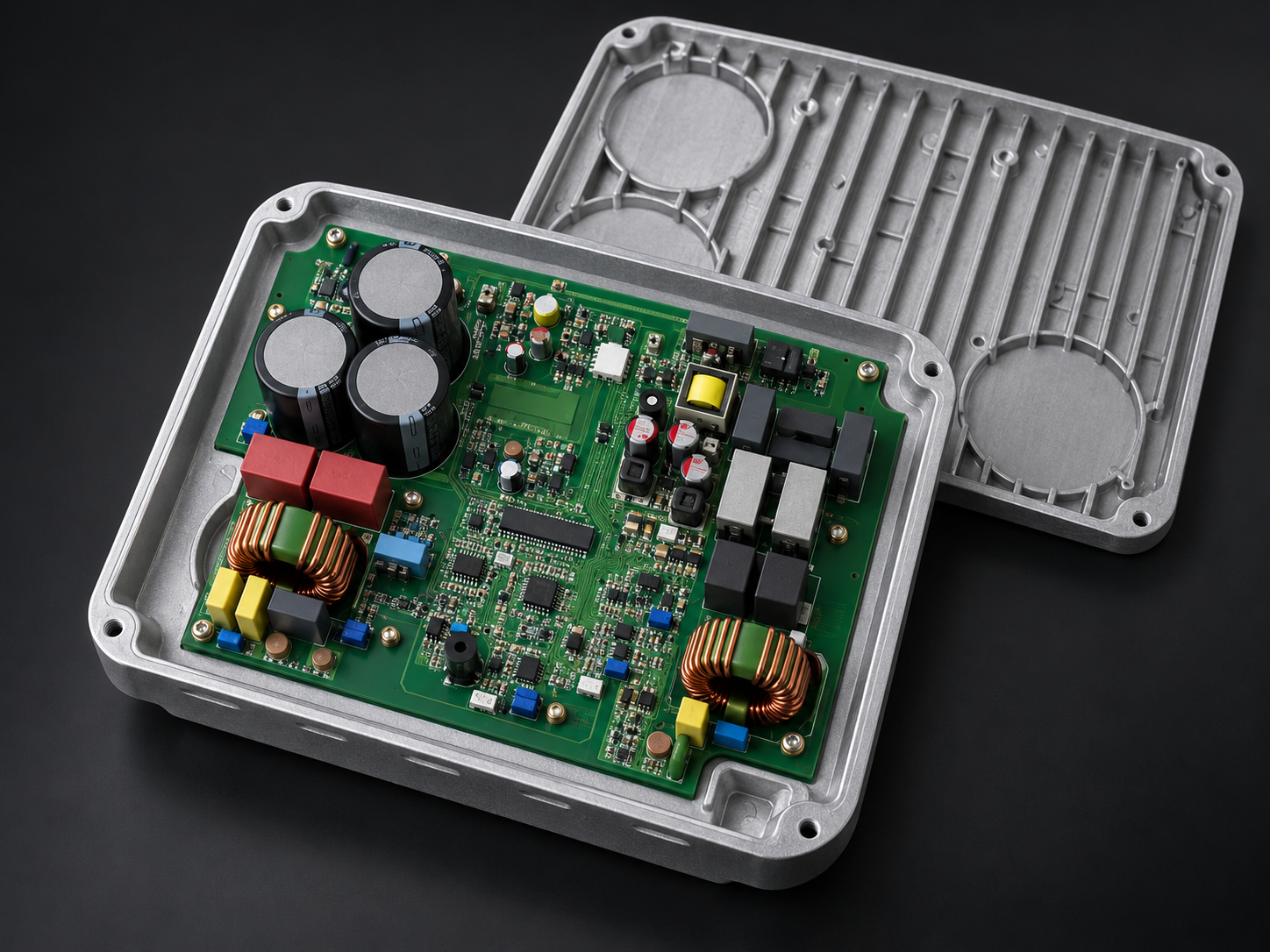
Grid-tie solar inverter electronics inside a cast-aluminium enclosure, showing three DC-link capacitors, dual wound magnetics and embedded control circuitry
06 / GRID-TIE INVERTER

Solar power synchronized to the grid

Grid-Tie Inverter Platforms

Grid-connected inverter hardware and embedded control developed across the complete conversion chain—from PV-side MPPT and DC-link regulation to synchronized current injection, protection and system monitoring.

Architecture
Two-stage conversion
Solar
Boost MPPT
Grid control
PLL + current control
Protection
Anti-islanding + fault handling
Power stage
Boost + full bridge
DC link
Closed-loop regulation
Output
Single-phase grid AC
Monitoring
PV / DC link / grid
03 / How we work

Engineering with the whole system in view.

We work with product companies, manufacturers and R&D teams from early architecture through transfer to production.

  1. 01

    Define the electrical reality

    Operating envelope, failure modes, thermal limits, cost targets and certification path.

  2. 02

    Design hardware and control together

    Topology, magnetics, sensing, protection and firmware are developed as one architecture.

  3. 03

    Prototype, measure, iterate

    Bench validation, waveform analysis and stress testing turn assumptions into evidence.

  4. 04

    Transfer a product—not a black box

    Manufacturing files, firmware, documentation and engineering support remain part of the handover.

Have a difficult power problem?

Let’s build what
doesn’t exist yet.

Start a conversation